
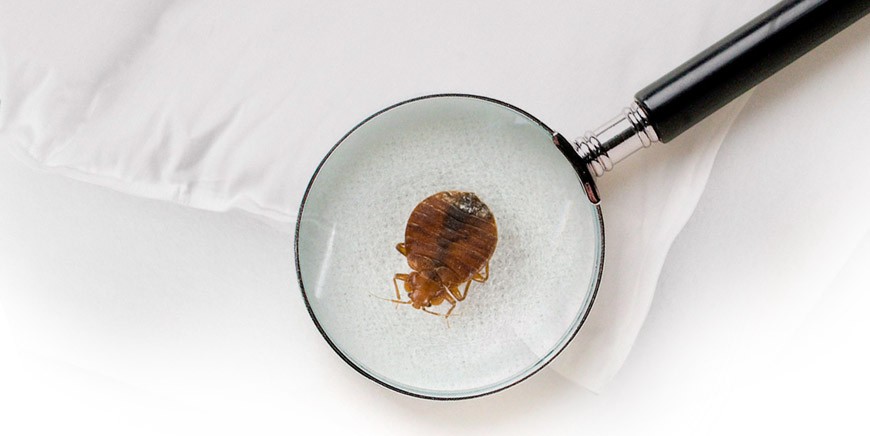
Bedbugs in a home are an increasingly common problem in Montréal. Anyone can have them without knowing it. Preventive measures and treatments are available, and both landlords and tenants have obligations when an infestation occurs.
Bedbugs are brownish insects visible to the naked eye and measure about four millimetres. They are mostly active at night and are generally found along mattress seams. Because they feed while people sleep, they are usually found in bedrooms. During the day, they shelter in dark, dry places such as wall cracks, curtains, clothing, loose wallpaper, baseboards and behind pictures. In a heavy infestation, they may also be found elsewhere, including dishes, cabinets and toys.
Bedbugs do not jump or fly and move at approximately the speed of an ant. They are generally transported on fabrics, furniture and luggage. They are sensitive to extreme temperatures and, depending on the ambient temperature, can survive for more than a year without feeding.
Bedbugs can be detected directly, by observing one on a person or mattress, or indirectly through blood, droppings or bites. Bites can itch, often appear in groups of three, and may be red and raised with a small red point in the centre. Small black droppings may appear along mattress or sofa seams, and shed skins or small blood stains may be found in beds. Bedbugs do not transmit diseases, and their presence does not necessarily have to be reported to public-health authorities. Their bites are usually mild, although severe cases may cause skin problems or allergic reactions. Other effects can include shame, guilt, sleep loss and isolation.
What should be done when bedbugs are found in a dwelling?
Tenants are therefore advised to notify their landlord or housing office promptly so that a professional exterminator can be called, the cost covered and appropriate steps taken. A landlord cannot blame a tenant for having bedbugs, but may hold the tenant responsible for failing to report and address the situation. In most cases, the original article states that the housing authority requires the landlord to pay extermination costs.
People should not try to resolve the problem themselves without involving a professional exterminator.
The original article warns that many insecticides are ineffective and may push bedbugs into other dwellings, agitate them and accelerate reproduction, thereby increasing the spread of the infestation.
Where are bedbugs found?
Bedbugs live mainly in the bedrooms where they bite sleepers at night to feed on their blood. Bedbugs avoid light and hide:
Around mattresses and box springs;
In bed frames;
Cracks in walls, floors and furniture;
Behind pictures;
Under mouldings;
In electrical outlets;
Inside any other object that provides a dark, narrow place to hide. A gap as thin as a credit card can provide shelter. Bedbugs can be found in wealthy or lower-income households and in clean or unclean homes. Unlike lice or other parasites, bedbugs do not live on humans.
How do bedbugs spread?
Bed bugs are transported from one place to another when the object in which they are hidden is moved. Bags, suitcases, clothing, mattresses, furniture, bedding, laptops and even wheelchairs can transport bedbugs.
What are the health effects?
Bedbugs do not transmit diseases to humans. Bites on the skin are the first indication of the presence of bedbugs in a dwelling. The arms are usually the most affected areas, but all exposed skin during sleep can be bitten by bedbugs. Bites or lesions resemble mosquito bites. They usually disappear after a few days. Bites can cause severe itching. Scratching the lesions can cause skin infections.
The main health problems caused by bed bugs are:
Itchy skin (bites)
Sleep disturbance
Anxiety
Social isolation.
What to know about eliminating bedbugs effectively
Tell the owner or property manager. The occupant must notify the landlord or person responsible for pest control as soon as bedbugs are found in the dwelling.
Act quickly
Owners or building operators are responsible for promptly calling qualified pest-control professionals (exterminators holding a government licence) to find solutions to the problem.
Use effective control methods without creating health risks
Several control methods should be considered, rather than relying only on insecticides. Qualified pest-control professionals should use only insecticides registered for bedbugs. Insecticide use should be limited to the minimum necessary to reduce its impact on occupants’ health. Treatments must be repeated until the bedbugs have been eliminated.
Work together
Without collaboration among occupants, owners or building operators and qualified pest-control professionals, it is difficult to eliminate bedbugs effectively from a dwelling or building. Acting quickly helps control the extent of an infestation and reduce its adverse effects on the population. The original article urges Montréal to avoid the situations experienced by other major North American cities.
“According to a 2010 survey, 2.7% of households on the island of Montréal had experienced bedbugs in their homes during the 12 months preceding the survey. In the coming years, this sanitation problem could become more widespread and its health effects increase. To curb the spread of bedbugs, the DSP intends to participate fully in developing the action plan by contributing scientific expertise in surveillance, knowledge acquisition and support for front-line workers,” Dr. Lessard states.
As we know, bed bugs have made a comeback recently in most major cities of the planet, and Montreal is no exception. These insects bite sleepers at night to feed on their blood. Among the occupants of infested housing, bedbugs cause skin problems and can cause sleep problems, stress and anxiety or social isolation. Moreover, inappropriate use of insecticides to get rid of bedbugs can cause health problems.
For prompt assistance, contact us.